Shadow DOM keeps the widget's styles separate from the host
The build packages Tailwind CSS with JavaScript through `tsup`, then injects it into the shadow root on mount. Host CSS, including Bootstrap, cannot cascade into the widget.
supporting system
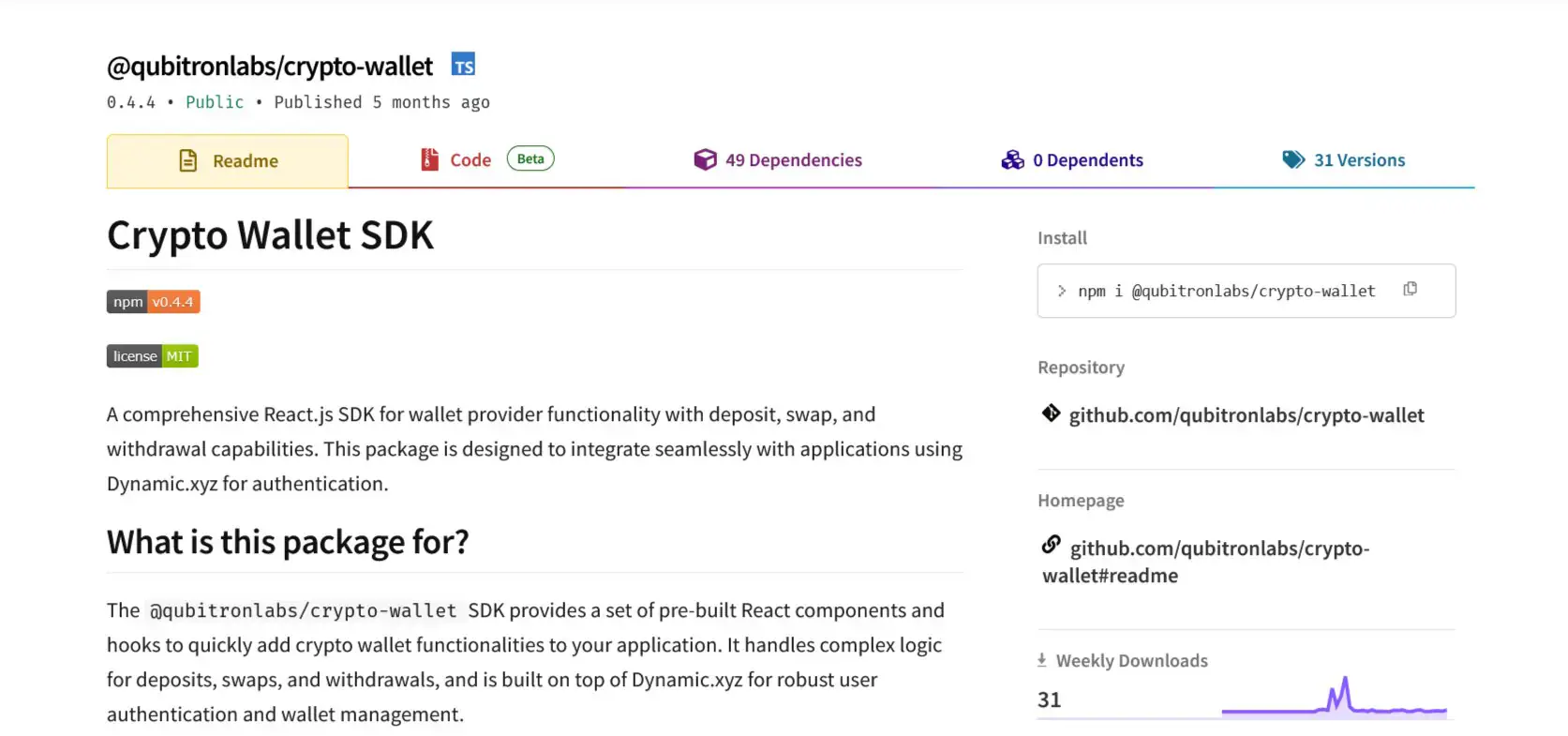
Published npm Package - Drop-in Wallet Widget with Shadow DOM CSS Isolation
This React and Next.js wallet SDK handles deposits, swaps, withdrawals, and tips inside another application. Shadow DOM keeps the widget's Tailwind styles separate from host styles such as Bootstrap, WordPress themes, or a React app's own CSS. It took three architecture iterations and nearly 32 published versions to reach the npm release.
 first proof
The widget can be embedded in another Next.js application. It lets users connect a wallet, make 1inch swaps, withdraw through smart contracts, deposit, and tip. Its Shadow DOM boundary keeps Bootstrap, Tailwind, and other host styles from changing the widget, while keeping the widget's own styles out of the host page.
The goal was a wallet widget that could be added to any Next.js app without disturbing its CSS. The first version required the host to install Tailwind, which conflicted with Bootstrap. The second bundled CSS, but the cascade could still cross the boundary. Shadow DOM solved that, and moving Radix portals into the shadow root completed the setup. It took 32 published versions to refine and is now used in production.
TypeScript / React / Next.js / Zustand / Immer / viem / wagmi / Socket.IO / Dynamic SDK / tsup / Tailwind CSS v4 / shadcn/ui
01 / 05Runtime configuration supplied by the host application.
The build packages Tailwind CSS with JavaScript through `tsup`, then injects it into the shadow root on mount. Host CSS, including Bootstrap, cannot cascade into the widget.
A live transaction update can arrive before the API returns a block hash. Fuzzy matching connects that event to the pending operation through transaction-hash fragments.
The SDK has no build-time environment variables. It reads API keys and settings from host-provided configuration at runtime, so the same package works in development, staging, and production.
Radix portal components target a specific container inside the shadow root rather than `document.body`.
結論Shadow DOM proved to be the practical answer to third-party CSS overriding utility classes. The path there took three architecture iterations and nearly 32 releases. Studying Dynamic.xyz made the key point clear: the boundary must keep styles from crossing in both directions.
Make it hold together
Architecture, interface, production constraints. Together.